A product qualified lead (PQL) is a prospective customer who has already experienced meaningful value from your product — typically through a free trial or freemium tier — and exhibits behavioral signals that indicate readiness to buy. Unlike MQLs who clicked an ad or downloaded an ebook, PQLs have used the actual product. That single difference is why PQLs convert to paying customers at 15–30%, compared to 1–2% for traditional MQLs.
In this complete guide, you’ll learn what product qualified leads are, how to distinguish them from MQLs and SQLs, how to identify your own PQL threshold, and the proven tactics top SaaS companies use to convert them into revenue.
First Glance at MQL and SQL Definitions
Companies get in touch with customers with various needs, through campaigns or projects. To manage resources accurately, you need to separate the customers who are interested in your product from others who do not intent to buy or are not familiar at all. At that point, there are two kinds of leads:
MQL – Marketing Qualified Lead: It represents people who have already interacted with your product through the website or other channels, meaning they are more likely to become paying customers because they already demonstrate a particular interest in what you are offering. MQL is important for the relationship goals with the customers. Interactions like filling a form on your website, or subscribing to e-mailings are considered metrics that determine where a customer stands in the buying cycle.
They are not fully engaged with your product but are likely to purchase it, and various marketing efforts will show either they will convert to paying customers, or not. In other words, this will show you if the User Activation is successful or not.
SQL – Sales Qualified Lead: After trials, demos, and special solutions are offered to MQL at the decision stage, they become SQL’s who exhibit more potential for prospective purchases. These are leads that have reached the contracting stage. Sales Qualified Leads are closely observed so that they can later be converted to paying customers.
They are more likely to try to interact with your product in any kind of way and purchase the product, but still, your sales team plays a huge role here in order to have the purchase realized.
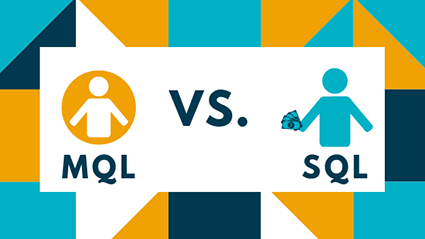
PQL vs MQL vs SQL: A Side-by-Side Comparison
Understanding the differences between these three lead types is essential before you can build an effective qualification strategy. Here is a structured comparison across the dimensions that matter most for SaaS businesses:
| Dimension | MQL | SQL | PQL |
|---|---|---|---|
| Definition | Showed marketing interest (downloaded content, visited site) | Vetted by sales as ready to buy | Experienced real value in the product through trial or freemium |
| Qualification signal | Form fills, email opens, content downloads | Demo request, budget confirmed, timeline stated | Feature usage, activation events, upgrade behavior |
| Typical conversion rate | 1-2% | 15-25% | 15-30% |
| Sales effort required | High (significant nurturing needed) | High (active sales cycle) | Lower (product has done the selling) |
| Best for | Early awareness stage | Enterprise deals | PLG / product-led growth companies |
The key insight: PQLs and SQLs have similar conversion rates, but PQLs require far less sales effort because the product itself has already demonstrated value. That efficiency is why product-led growth companies achieve dramatically lower Customer Acquisition Costs (CAC) compared to sales-led competitors.
Is There a Consensus on the Definition Of Product Qualified Leads?
Product Qualified Leads (PQL) is a new term in the marketing and sales business, compared to MQL, and SQL. PQL is replacing the traditional approaches that MQL and SQL when the goal is purchasing potential customers, and finding new marketing approaches for different user segmentations. The definition of a PQL can vary from company to company or a project. You need to define your own PQL as a company, considering certain features to make easier data collection and analysis. However, making a general definition is possible.
PQL – Product Qualified Lead: These are leads that tried your product through a free trial or freemium models. PQL and MQL are not the same; it is more likely that PQL will convert to sales more than MQL as long as you trust your product. The essential indicator here is the customer belongs under the PQL’s if they have recognized the value of your product. You can tell this if they tried a free trial or freemium model. The keyword here is “value”.
Your team does not explain the product value to this kind of leads, PQLs understand the product value themselves. That point increases the possibility of their becoming long-term paying customers.
Types of Product Qualified Leads
Not all PQLs are created equal. The behavioral signals that indicate product value recognition fall into three broad categories, and understanding which type you are looking at determines how your sales or success team should respond.
Usage-based PQLs are identified by reaching a volume or frequency threshold within the product. These users have consumed enough of your product that the natural next step is upgrading. A classic example is a project management tool that triggers a PQL signal when a team creates their 10th project in a free plan – usage depth signals genuine reliance on the product. The qualification criterion is quantitative: X actions, Y sessions, Z data records created.
Feature-based PQLs are users who have interacted with a specific high-value feature that correlates with long-term retention. These are often “aha moment” features – the ones that make users say “I need this every day.” For a changelog tool like AnnounceKit, a feature-based PQL signal might be a user who has published their first announcement widget and seen their first reader engagement. The feature interaction proves the user understands the core value proposition.
Intent-based PQLs exhibit behavioral signals that indicate purchase intent, even without hitting usage thresholds. These include viewing the pricing page multiple times, inviting teammates to the workspace, attempting to use a paid-only feature, or starting but not completing an upgrade flow. Intent-based signals are particularly powerful because they often appear before usage thresholds are hit – catching high-potential leads earlier in the trial window.
How to Identify Your Product Qualified Leads
Identifying PQLs is not guesswork – it is an analytical process that combines your Ideal Customer Profile (ICP) with product activation data. The framework has two inputs: who the user is, and what they have done in your product. Both signals are required; a high-usage user outside your ICP is less valuable than a perfect-fit user who has hit activation milestones.
Start by defining your activation point – the specific in-product action that most reliably predicts conversion and long-term retention. The best way to find this is to analyze your existing paying customers: what actions did they take during their trial that free users who never converted did not? This is your “activation event.” For many SaaS products, this is a single, specific action (e.g., “connected an integration,” “invited a second team member,” “published their first item”) rather than a generic engagement metric like “logged in 5 times.” You can explore user segmentation strategies to sharpen your ICP definition and match it against behavioral signals more precisely.
Once you have your activation event, layer in firmographic and demographic filters from your ICP: company size, industry, role, and geography. A user who hits your activation event AND matches your ICP is your highest-confidence PQL. A user who matches your ICP but has not hit the activation event is a strong candidate for in-product nudges. A user who hits activation but is outside your ICP may be valuable for a self-serve motion but not necessarily worth outbound sales effort. This two-axis framework – ICP fit crossed with product activation – gives your team a clear, objective PQL definition that is repeatable and measurable.
Starting Simple: What Is a Minimum Viable PQL?
If you are early in your product-led growth journey, you do not need a sophisticated ML model to identify PQLs. A minimum viable PQL (MVPQL) is the simplest possible definition that outperforms your current MQL-based approach. For most early-stage SaaS companies, this is a single activation event combined with one ICP filter – for example, “user in a company with 10+ employees who has completed the core setup flow.” Start here, instrument it in your CRM, and measure conversion rates. Refine the definition quarterly as you accumulate data. The goal of a MVPQL is to replace gut-feel sales prioritization with a repeatable, data-backed signal, not to build a perfect model on day one.
Real Company PQL Examples: Slack, Dropbox, and Notion
The most instructive way to understand PQL thresholds is to look at how successful PLG companies have defined them in practice. These examples show the range of signals companies use – from hard usage numbers to specific feature interactions.
Slack identified that teams that exchanged 2,000 messages in the product had an over 93% retention rate. That 2,000-message threshold became one of the best-known PQL benchmarks in SaaS – not because Slack set it arbitrarily, but because they analyzed their own customer data and found this threshold predicted long-term retention with high reliability. The activation event was simple: enough team communication that Slack had become the default channel for work.
Dropbox identified file-sharing as the core activation event. A user who had uploaded files and shared a folder with at least one other person had demonstrated Dropbox’s core value (collaborative cloud storage) and was far more likely to upgrade than a user who had only uploaded files solo. The social signal – sharing – was a proxy for product reliance. It also triggered a viral loop: the invited collaborator became a new potential user.
Notion treats workspace collaboration as its primary PQL signal. A user who has created a page, shared it with teammates, and had those teammates make edits has experienced Notion as a team tool rather than a personal notes app – and team tools are far stickier and more likely to convert to paid plans. Notion’s PLG model depends on this network effect: individual users bring in their teams, teams hit the PQL threshold, and paid conversions follow naturally.
Why Choose Product Qualified Leads?
Discovering the potential customers already interested in your product saves your time and money rather than trying to convince totally new customers. Additionally, the revenue of a company will continue to grow through repetition by product qualified leads.
Alex Kulitski, Founder and CEO at Smart IT, indicates in Forbes that differentiating digital product or service in a way that your customer target finds meaningful is essential to create value for your lead, while he also mentioned SaaS start-ups and companies should adopt value-based pricing for being dynamic, and gaining more profit in the modern business world.

PQLs are the most efficient for both your customer management and company growth when they are chosen to focus on a product-led growth strategy. Product-led growth basically defines the models where a product is a primary driver to provide user acquisition, retention, and expansion. Through PQL, you will have a chance to drive sales with your product, ensure you know where your customer stands in the sales funnel, and improve your product by analyzing the collected data.
Who Owns PQLs? Cross-Functional Roles and Responsibilities
One of the most common implementation failures with PQL programs is unclear ownership. Unlike MQLs (which marketing clearly owns) or SQLs (which belong to sales), PQLs sit at the intersection of product, sales, and customer success – and without deliberate role assignment, they fall through the cracks.
Product owns the definition and instrumentation. The product team is responsible for identifying which in-product behaviors predict conversion (the activation events), building the tracking infrastructure, and evolving the PQL definition as the product matures. Product analytics tools like Mixpanel or Amplitude are typically used here to run cohort analyses and validate that the PQL threshold actually predicts revenue outcomes.
Sales acts on PQL signals with a lighter-touch, product-informed approach. Rather than cold discovery calls, a PQL-focused sales rep leads with product knowledge: “I saw you published your first announcement widget – how is the team using it?” This context-aware outreach converts at significantly higher rates than generic outbound. The sales team’s role is to accelerate the decision the PQL has already largely made. The product release management process can also surface natural moments to engage PQLs – when a feature they have been using gets a major upgrade, for example.
Customer Success monitors trial-stage activation and intervenes when high-ICP users are not reaching the PQL threshold. If a user from a target company has been in a trial for 7 days but has not hit the activation event, CS can trigger an onboarding check-in, an in-app prompt, or a targeted email sequence. The goal is to help the user get to the “aha moment” before the trial expires – because a user who experiences value before expiry is far more likely to convert than one who does not.
Contribution of Product Qualified Leads for SaaS
While the sales funnel is still a marketing-driven process, if you have a product-led growth plan, every SaaS project is giving free trial or freemium model opportunity to users. Therefore, the customers who consider buying the Premium version before trying the product would want to learn what your product value is, and how it can meet needs. Still, keep in mind that just some of these customers will be interested in your product, and all you need is to focus on them through relevant and accurate data.
Product Qualified Leads contribute to SaaS Projects, and vice versa, SaaS creates a space for PQL. Thanks to SaaS projects giving free trial or freemium usage, product usage data can be collected which shows the real buying intent. Launching your SaaS project requires creating buyer personas. PQL helps create new buyer personas accurately. Meanwhile, you can observe buying behaviors to know who you really should target next. Your team will communicate with potential customers to convert them. It will be a time and money-saving action by defining customers who do not have any intent to buy your product. If the data you gained through SaaS is interpreted through PQL, the company gains insight into how to act in the future. PQL and SaaS cooperation will bring long-term growth and success.
How to Convert PQLs Into Paying Customers
Identifying a PQL is only half the job. The other half is executing a conversion motion that respects the user’s product experience while accelerating their upgrade decision. The most effective PQL conversion tactics share a common thread: they are triggered by product behavior and contextualized to the user’s experience, not generic sales sequences.
Contextual upgrade prompts are in-app messages or modals that appear at the exact moment a user attempts to use a feature gated behind a paid plan. Done well, these are helpful nudges that appear when the user has already demonstrated intent (“you have hit your 5-project limit – upgrade to continue”). The best upgrade prompts include the specific feature the user was trying to access, the plan tier that unlocks it, and a single clear call-to-action.
Timely feature announcements are one of the highest-leverage PQL conversion tactics available. When a PQL has been actively using a feature and you release a meaningful upgrade to that feature, a well-timed announcement delivered directly in the product interface can push them over the purchase threshold. Tools like AnnounceKit help convert PQLs by delivering timely feature announcements to trial users – surfacing the right product news at the moment it is most relevant to the user’s current workflow.
Sales-assisted conversion works best for PQLs who match a high-value ICP but have not self-converted after hitting the activation threshold. A personalized, product-informed outreach email referencing what the user has actually done in the product outperforms generic sales sequences by a wide margin. The key is specificity: “I noticed your team has published three announcements this week” lands far better than “I would love to show you what AnnounceKit can do for you.” Effective internal product launch communication can complement this motion by keeping your own team aligned on which PQL segments to prioritize.
Automated nurture sequences triggered by PQL signals are the scalable version of sales-assisted conversion. When a user hits your activation event, they enter a dedicated email sequence that reinforces the value they have already discovered, shows social proof from companies like theirs, and provides a frictionless path to upgrade. The sequence should be short (3-5 emails over 7-10 days) and each email should reference the product experience, not generic marketing copy.
Technology and Tools That Support the PQL Process
Running a PQL program at scale requires the right tooling across three functions: data collection and analysis, CRM and sales workflow, and in-product communication. Here is a practical overview of the technology stack most product-led growth companies use.
Product analytics tools (Mixpanel, Amplitude, PostHog) are the foundation. These tools capture every in-product event, allow you to define your activation events, build user cohorts based on behavior, and set up automated triggers when users hit PQL thresholds. They are also where you run the cohort analyses needed to validate and refine your PQL definition over time – comparing conversion rates for users who hit activation event A vs. B.
CRM with product data enrichment (HubSpot, Salesforce with Segment integration, or dedicated PLG CRMs like Pocus or Calixa) allows your sales team to see PQL signals directly in the tools they already use. The goal is to surface the right PQL to the right rep at the right time – with full product context – without requiring manual data pulls from analytics dashboards.
In-product communication tools (AnnounceKit, Intercom, Appcues) handle the in-app side of PQL conversion: contextual upgrade prompts, onboarding checklists, feature announcements, and behavioral email triggers. AnnounceKit specifically excels at delivering feature announcements and product updates to trial users at the moment they are most engaged – a high-leverage touchpoint for converting PQLs who are actively using the product but have not yet upgraded.
Frequently Asked Questions About Product Qualified Leads
What is a product qualified lead (PQL)?
A product qualified lead (PQL) is a potential customer who has already used your product – typically through a free trial or freemium tier – and demonstrated meaningful engagement that signals readiness to buy. Unlike marketing qualified leads (MQLs), which are based on content interactions or demographic data, PQLs are qualified by actual product usage. The specific usage threshold that defines a PQL varies by company and is determined by analyzing which in-product behaviors most reliably predict conversion to a paid plan.
How is a PQL different from an MQL?
An MQL (marketing qualified lead) has shown interest in your brand through marketing channels – downloading a whitepaper, attending a webinar, or visiting your pricing page. A PQL has gone further: they have actually used your product and experienced its value firsthand. This distinction matters enormously for conversion rates. MQLs typically convert at 1-2% because interest does not equal intent. PQLs convert at 15-30% because they have already validated the product’s value for themselves – your sales team is accelerating a decision the user is already considering, not trying to convince a skeptic.
How do you identify product qualified leads?
Identifying PQLs requires two inputs: your Ideal Customer Profile (ICP) and a defined activation event – the specific in-product action that most reliably predicts conversion among your existing customers. Start by analyzing your current paid customer base to find the common actions taken during their trial period that free users who churned did not take. That behavioral difference is your activation event. Layer in your ICP filters (company size, industry, role) to rank PQLs by priority. Users who match your ICP and have hit your activation event are your highest-confidence PQLs.
What is a good PQL conversion rate?
PQL-to-paid conversion rates typically range from 15-30%, though the exact number depends heavily on how precisely your PQL threshold is defined. A loosely defined PQL (e.g., any user who logs in twice) will produce lower conversion rates because it captures too many low-intent users. A tightly defined PQL (e.g., a user who hits a specific activation event and matches your ICP) will produce higher conversion rates but a smaller total volume. Most PLG companies aim for a PQL conversion rate above 15% as a baseline.
What tools are used to track product qualified leads?
The core toolset for PQL tracking includes a product analytics platform (Mixpanel, Amplitude, or PostHog) to capture behavioral events and define activation thresholds, a CRM (HubSpot or Salesforce) enriched with product data to give sales teams real-time PQL visibility, and an in-product communication tool (AnnounceKit, Intercom, or Appcues) to deliver timely prompts and announcements to users approaching or crossing the PQL threshold. For smaller teams, even a simple integration between your product database and a CRM can be enough to run a basic PQL motion effectively.
Can a freemium product have PQLs?
Yes – freemium products are arguably the best environment for PQL programs because users have unlimited time to experience product value before making a purchase decision. The PQL threshold in a freemium model is typically defined by feature depth or usage volume rather than time-based trial expiry. A freemium user who has used 3 of 5 key features, invited 2 teammates, and visited the pricing page twice is a strong PQL even if they have been on the free plan for 6 months. The freemium context also allows companies to observe richer behavioral data over longer periods, making PQL definition more accurate.
How does product-led growth relate to PQLs?
Product-led growth (PLG) is the go-to-market strategy in which the product itself is the primary driver of customer acquisition, conversion, and expansion. PQLs are the operational mechanism through which PLG companies identify and act on conversion opportunities. In a PLG motion, the free trial or freemium tier is not just a marketing tactic – it is a deliberately designed value delivery vehicle that generates PQL signals. Without a PQL framework, a PLG company has no systematic way to distinguish high-intent users from casual explorers, making it impossible to prioritize sales effort or trigger the right in-product conversion experiences at the right time.
AnnounceKit offers you a free start today. The product team is ready to help you with keeping your user base updated with eye-catching widgets, sending important announcements to the very base, collecting valuable feedback, and creating personal bonds between your team and users. Start with a free trial and make your start-up or business projects more vocal!

![Product Management vs. Project Management: Key Differences [2026]](https://announcekit.app/blog/wp-content/uploads/2021/01/513a357a-b913-466e-a0f0-db890838a34c-768x512.jpg)