While app release notes are designed to help keep users informed about updates and improvements, they’re also an excellent opportunity to exhibit brand recognition and identity.
However, they aren’t always good. Sometimes, they’re really, really bad.
Scroll through some of your favorite apps’ release notes and you’ll likely find them to be dry and boring. They give only small insights into what was updated, often writing “bug fixes” and leaving it at that.
As an app (mobile, desktop, or both), you want user stickiness. You want users to be raving fans and encourage their friends, families, or business colleagues to use your app.
To ensure user stickiness, you want them to know about your newest, coolest feature. A great way to do that is through app release notes.
Learn why app release notes are important, how to write them well, where to release them, and some of the best (and worst) ones we’ve seen.
Table of Contents
- What Are App Release Notes?
- The Importance of Good App Release Notes
- 5 Tried and True Ways To Deliver App Release Notes
- How To Write the Best App Release Notes That Bring Value to Your Users
- Best App Release Notes: Our Top 7 Picks
- Examples of Not-So-Great App Release Notes
- How Much Do Users Really Care About App Release Notes?
- AnnounceKit: The Ultimate Project Management Tool To Get Your App Release Notes Noticed
What Are App Release Notes?
App release notes describe changes to an app that are released to the public. They typically include new features, bug fixes, and performance improvements. Users may read app release notes to stay up-to-date on changes and ensure that they are using the most recent version of the app.
Today, if you pay attention to the ‘What’s New’ section on App Store release notes or Google Play Store release notes, applications have two approaches:
- They don’t care about notifying users about new changes.
- They make it funny and eye-catching.
If you view app release notes on a product’s website, they won’t be much different. Odds are if the in-app notes are poor, the release notes featured in their updates will be as well.
According to Wikipedia (aka a well-trusted source on the Internet), application release notes are technical documents that accompany software products in beta stages or enhanced or repaired. These notes explain to the customer or client the details of the particular version of the product they are using. They attempt to assist the customer in installing the update and provide confidence to the user regarding the product.
The notes can be technical or generic, depending on who your end user is. Regardless, the common rule is to include the following:
- Build number
- Additions
- Removals
- Changes
- Fixes
Who Should Write App Release Notes?
Typically, the development team or product management team writes release notes. Otherwise, a technical writing team (constantly communicating with the development team) may write them.
Product management or development teams are usually most familiar with the changes and enhancements made to software, so it makes sense that they would create the best app release notes. Not only do they have a deep understanding of the technical details of the software, but they can provide accurate and comprehensive information about the changes.
AnnounceKit makes writing app release notes easier than ever before. Use our release notes software to organize updates, add your personal touch, and engage your users before sending them to your audience.

App Release Notes For Your Brand: Quick Setup, Easy To Use
Manage release notes and product announcements from a single place.
The Importance of Good App Release Notes
A good release note can be highly beneficial for your product or company. They can:
- Enhance the user experience by providing clear information about the changes made to the product or software and how they may impact the user’s experience.
- Improve the reputation of your product or company by allowing you to demonstrate your commitment to transparency and user satisfaction.
- Reduce the load on your support team by minimizing their need to answer the same questions about known issues or feature requests.
- Allow users or organizations to plan for updates because they can see the product roadmap and know that positive changes are coming.
- Build excitement for new features or products by teasing enhancements to engage users.
5 Tried and True Ways to Deliver App Release Notes
Users should not have to sift through your app to find important release information, nor should they have to deal with pop-ups or notifications that inform them about product changes. With the right tools and processes in place, you can easily deliver app release notes through various platforms.

#1: Email
Use email to directly communicate with your users instead of waiting for them to use your product to receive important release updates. You can share upcoming updates, announce important changes, and more.
#2: Social Media
Spotlight single features that will positively impact most of your users and use these platforms to build hype and excitement around new releases and updates.
#3: Blog Posts
Use blog posts to handle longer-form content for releases that deserve or require more information or explanation.
#4: Tutorials and User Guides
Video tutorials or user guides are great ways to show how new features will work. This will help minimize confusion as users see that things look different when they use your product.
#5: Google Play Store/Apple Store
App release notes are common in Google Play and Apple’s App Store. When a user is looking to download or update an application in the app store, they can view an extensive list of release notes and see a version history so they’re well aware of any changes.
How To Write the Best Release App Notes That Bring Value to Your Users
Release notes for apps usually don’t have a technical background. Instead, they share more about how the update will affect the user’s experience.
Because of this, app release notes should be:
Relevant and Useful
Sending out app release notes about changing your secondary brand colors from “orange” to “burnt orange” is probably irrelevant to your users.
If your app is for buying used cars, and you release a new feature that allows people to get text message updates if their preferred car model, make, and year pop up in their area, that’s incredibly relevant!
If they see a notification about this update, they will likely engage with it.
And when they engage in it, they’re subconsciously being trained that “these in-app release notes notifications are valuable to me. I need to keep clicking on them.”
Entertaining To Read
If your app release notes are dull, dry, and “blah” they’re not going to make as much of an impact as you’d like.
How will you get your users excited about your app if your release notes are as lively as a dead fish?
Want to get your users excited about your product’s updates?
Sound excited.
Easy To Understand
Let’s build on the example above regarding the app for used cars releasing a new text message feature.
Product development teams can write this in two ways: one is complex and challenging to understand, while the other is simple and engaging.
- Bad: “Our app has officially been pushed through production for Version 4.1.7, enabling SMS updates for vehicle specification requirements based on user interest. If legally opted in, the user may get notified of…” (We’ll stop there because this is already pretty boring.)
- Good: “You can now receive text messages when your favorite Make, Model, or Year is listed for sale in your area! Want a 2017 Mercedes C-Class? All you have to do is opt-in for text messages, and we’ll ping you every time a 2017 Mercedes C-Class is listed for sale.”
Visible
When using apps, people usually don’t click around to search for release notes — they’re there to use the app.
So when relevant updates are ready to get pushed out, users should see them through clear in-app notifications.
Leveraging other channels, such as email, is also helpful for increasing visibility. Do you want to know how to increase the visibility of your release note even more?
AnnounceKit is a fun and easy way to publish release notes while also providing users with avenues for feedback and product roadmap navigation. Don’t hide your release notes from users.
Our product announcement tool allows you to display release notes and changelogs in a fun, easy-to-use, and engaging way. And you don’t need to know how to code it. (This means your non-coding project manager can take over, or you, as the app developer, can take a break from coding for once.)
App Release Notes For Your Brand: Quick Setup, Easy To Use
Manage release notes and product announcements from a single place.
Best App Release Notes: Our Top 7 Picks
Slack and Medium
Release notes and changelogs that exude style and humor are where it’s at.
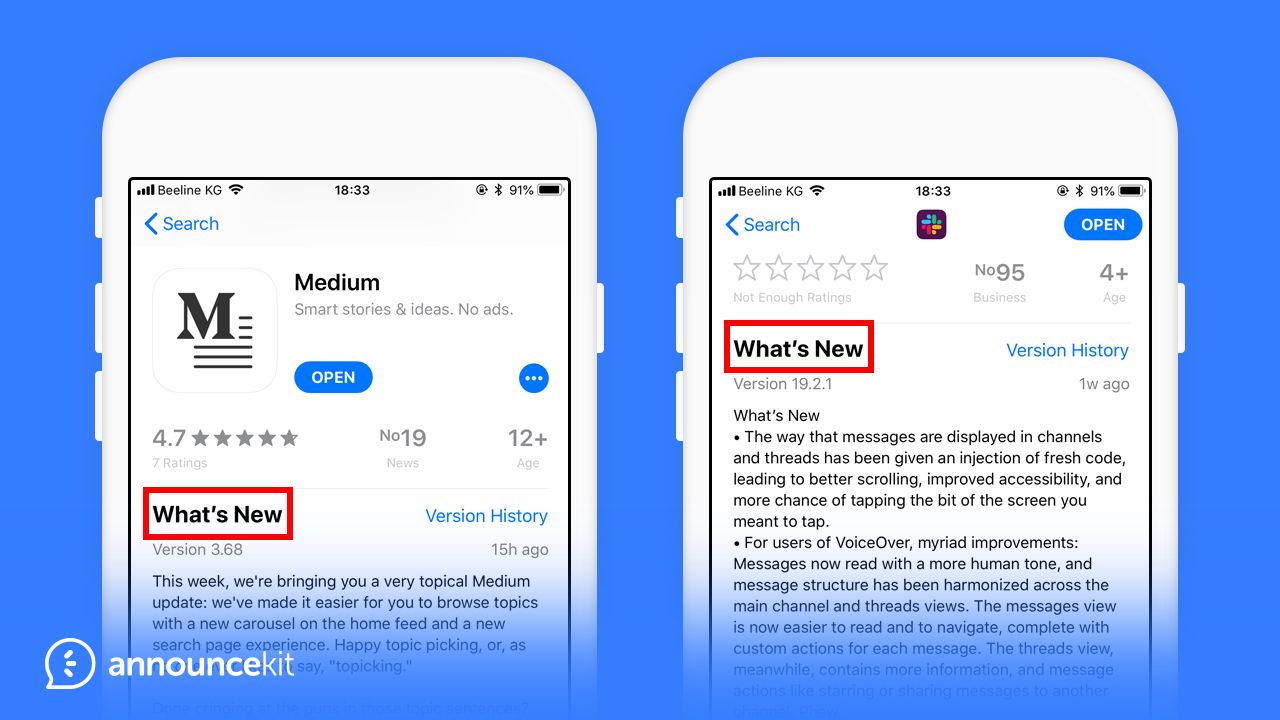
Slack uses a conversational tone during their release notes in this update:
“For the eagle-eyed: Yes, the last release was number 3.61. This one is 19.2.1. You haven’t missed anything or been asleep for a decade. We just changed the way we number releases.”
One Medium release note says, “This week, we’re bringing you a very topical Medium update: we’ve made it easier for you to browse topics with a new carousel on the home feed and new search page.
Have you had enough of cringing at the puns in those topic sentences? Great, we can move on to the less topical items of this release. We’ve also added better deep linking support for publications and granted writers the ability to opt into curating their stories in the post editor.”
Both of these release note examples are funny and stylish. They’re easy to understand, witty, and represent their brands well. Creating good release notes is not just about letting users know you made changes; it’s letting them know why you made the changes while throwing in a bit of character.
Related article: Why do you need a product updates page?
Asana, Twitter, and Netflix
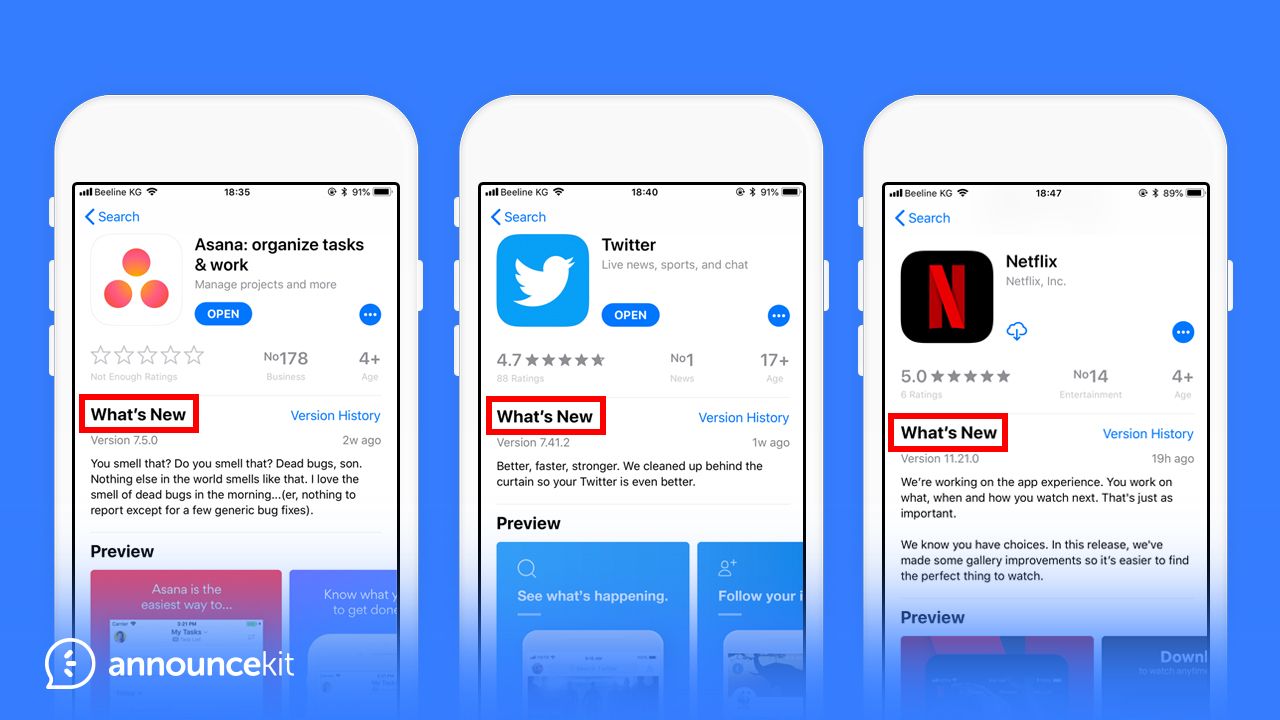
Asana, Twitter, and Netflix can make even the most mundane updates funny and exciting to read.
For example:
- Asana: “You smell that? Do you smell that? Dead bugs, son. Nothing else in the world smells like that. I love the smell of dead bugs in the morning… (er, nothing to report except for a few generic bug fixes).”
- Twitter: “Better, faster, stronger. We cleaned up behind the curtain, so your Twitter is even better.”
- Netflix: “We’re working on the app experience. You work on what, when, and how you watch next. That’s just as important. We know you have choices. In this release, we’ve made some gallery improvements so it’s easier to find the perfect thing to watch.”
It’s up to you to decide how to announce product updates, bug fixes, and new feature releases.
But AnnounceKit helps you announce them with sophistication and suave.
From the moment you sign up, your personalized changelog page will be ready and waiting.
There is no lengthy setup process, no need for custom code, and no stress or fuss. Simply adjust the colors so it’s on brand, add your logo, and you’re off. Our app release notes feature includes:
- Customizable public changelog page
- Privacy options for internal use
- A serve changelog under your domain
- The ability to collect feedback and reactions to your posts
- Rich media content
It’s easy to create stellar app release notes when you have the premier release note tool.
Tumblr
Tumblr is known for its quirky communities, creative posts, and witty release notes.
One recent note states, “Thanks for choosing Tumblr, the place for art and artists. Unfortunately, some bugs chose to connect with others over shared interests. We have to let them go. Follow changes.tumblr.com for further updates and blog fixes.”
Tumblr doesn’t forget to recommend that users check out exactly what was changed via its changelog.
Discord
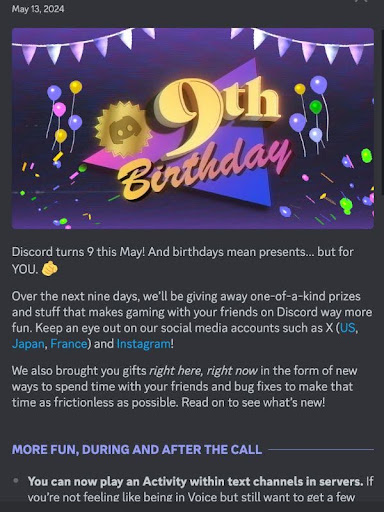
As an app that brings online communities together, Discord also brings its users into the fold with a fun, entertaining, and informative approach to release notes.
When they celebrated a recent birthday of their product, they decided to reward users (who read changelogs) with information on a giveaway celebrating their nine years on the internet.
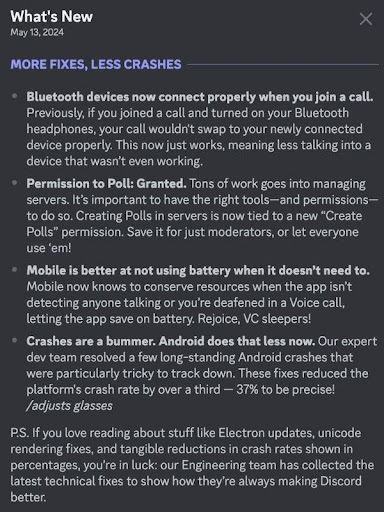
Discord also makes its ‘What’s New’ tab apparent so that all users can keep up to date with the newest additions, fixes, and features. Their release notes even make a nod to users who tune in from time to time, leaving little notes for them like:
“P.S. If you love reading about stuff like Electron updates, Unicode rendering fixes, and tangible reductions in crash rates shown in percentages, you’re in luck: our Engineering team has collected the latest technical fixes to show how they’re always making Discord better.”
Examples of Not–So-Great App Release Notes
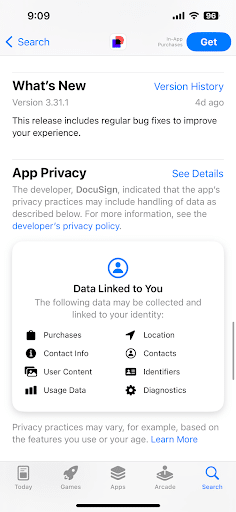
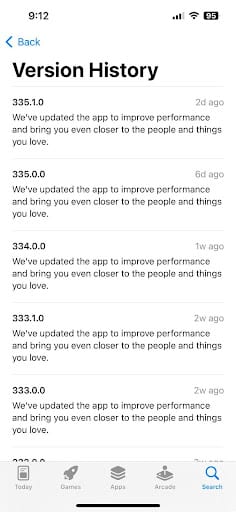
It is more common to see release notes that simply say, “bug fixed, performance improvement.” It seems like many companies followed Facebook’s lead and have decided that in their “league,” updating customers is not so cool.
Our purpose is not to offend some companies (looking at you, Instagram, Facebook, Uber, Google Drive, etc.) that create boring release notes. They likely have their reasons for keeping things generic and simple.
Instead, we want to inspire you to take a creative approach and make your boring ‘What’s New?’ section interesting and entertaining.
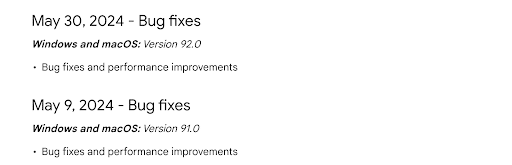
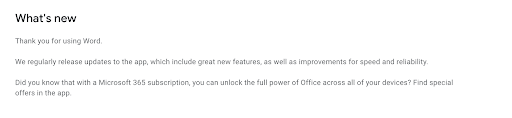
Here’s a sum of what most app release notes look like for these big-name apps:
- Google Drive: Bug fixes and performance improvements
- Microsoft Word: This month’s update is bug fixes.
- DocuSign: Bug fixes and enhancements
- Instagram: The latest version contains bug fixes and performance improvements.
Considering how many developers work with Microsoft Office or Google Drive and how fast their applications improve, none of the startups can catch up. So why do such big corporations not even bother with curating good app release notes?
They may not have to, but it doesn’t mean that it isn’t a good strategy, especially for newer app or product developers.
Side note: Release notes, like any other business activity, must correspond to brand management. It is understandable to see the conservative, structured release notes for companies such as the Economist or DIORMAG, but you would expect at least Instagram to make theirs more exciting.
How Much Do Users Really Care About App Release Notes?
As an app developer, you might wonder if anyone actually takes the time to read your app release notes or changelogs.
The answer is yes — and the number of your users who read them might surprise you.
One Medium writer decided to do a deep dive into how many app users read release notes based on demographics. Using help from an online community willing to answer surveys for free (a subreddit called r/samplesize), they found that out of the 372 respondents, about 84% claimed they read app release notes.
Over half claimed to read them sometimes, and 33% reported reading them regularly.
While this is a small sample survey from a corner of the internet, it paints a broader picture of the importance of writing good release notes to reflect your product and brand.
App Store vs. Google Play Release Notes: Key Differences
If your app lives on both iOS and Android, you are writing release notes for two very different audiences with two very different platform conventions. Understanding these distinctions is the difference between release notes that get read and ones that get ignored.
The Apple App Store gives you 4,000 characters for your “What’s New” section, but research consistently shows that users only read the first 3-4 lines before tapping “more.” This means your most compelling change needs to appear in the first 100-150 characters. Apple’s audience responds well to conversational, human-sounding copy. Keep sentences short, avoid jargon, and if you have a personality-driven brand (like Slack or Discord), let it shine in the opening lines. Apple surfaces your release notes prominently during the update flow, making this prime real estate for reinforcing brand voice.
The Google Play Store allows up to 500 characters for your “What’s New” section, but the display context is different. Google Play users are more likely to be browsing before installing — they often read release notes alongside reviews to gauge product quality and development activity. This means your Google Play notes should signal momentum: active development, responsiveness to feedback, and consistent improvement. A bullet-point format works especially well here because it communicates “we shipped multiple things” at a glance. Mentioning a user-requested feature explicitly (“You asked, we delivered — dark mode is here”) plays particularly well with the Android audience.
For teams managing both platforms, the smart approach is a cross-platform strategy: write a master update document internally, then tailor the first two sentences for each platform. The core facts stay the same; the framing and character limits differ. Tools like AnnounceKit let you maintain a single source of truth for your changelog while crafting platform-specific versions — eliminating the copy-paste-and-forget workflow that leads to inconsistent messaging across stores.
Release Notes Style Types: A Taxonomy
Not all release notes are created equal — and the best ones are not accidents. They are the result of a deliberate choice about tone, audience, and brand identity. Here are four distinct release notes archetypes, each with real-world examples of what they look like in practice.
1. The Bare Minimum: “Bug fixes and performance improvements.” This is the Google Drive, Instagram, and Facebook approach. It is technically compliant and requires zero effort. It tells users something happened, but nothing about what or why. This style is defensible only for massive platforms where users are not reading release notes anyway. For any company trying to build a relationship with its users, it is a consistently missed opportunity.
2. The Technical Changelog: A structured, version-specific list of changes written for a developer or power-user audience. Example: “v2.4.1 — Fixed race condition in authentication token refresh; resolved memory leak in image cache; updated to React 18.3.” This style is appropriate for developer tools, APIs, and B2B SaaS products where the audience is technical and expects precision. Linear, GitHub, and Stripe do this well. It earns trust with technical readers, even when it is not exciting to read.
3. The Brand Voice: This is where Slack, Discord, Duolingo, Figma, and Notion live. The release notes reflect the company’s personality so strongly that they become content in their own right. Duolingo’s notes often feature Duo the owl reacting to the update. Discord rewards readers who make it to the end with Easter eggs and inside jokes. Notion keeps its notes clean and thoughtful, matching the product’s minimalist aesthetic. Figma leads with a human observation about how designers work before listing specific improvements. This style requires more effort but pays dividends in user engagement and brand loyalty — some users specifically look forward to reading these notes each release.
4. The Hybrid (Best Practice): The ideal approach for most growing SaaS products and mobile apps. It leads with one or two personality-forward sentences that acknowledge the user’s experience, then transitions into a clear, readable list of what actually changed. This gives you the engagement benefits of brand voice while preserving the utility of a changelog. It also scales well: even a solo founder can maintain this style with a simple template, and it grows naturally as your writing team expands.
How Often Should You Publish App Release Notes?
Release cadence is one of the most underrated decisions in the app release notes process. Publish too rarely and users feel left in the dark. Publish too often and your notes start to feel like noise. The right answer depends on your release model, but there are clear patterns that work across team sizes and deployment styles.
For continuous deployment teams shipping multiple times per week, the best practice is to batch your release notes. Do not publish a “What’s New” entry every time a single bug is fixed. Instead, consolidate updates into weekly or bi-weekly summaries that group related changes under meaningful themes. This respects your users’ attention while still demonstrating active development. Notion batches smaller improvements under “various improvements and bug fixes,” reserving dedicated entries for features worth calling out individually — a model worth following.
For versioned release teams shipping discrete major and minor versions, the convention is simpler: publish notes with every version bump and scale the depth of your notes to the significance of the release. A patch release (v2.4.1) warrants brief notes. A minor release (v2.5.0) warrants a structured list with context. A major release (v3.0.0) warrants a dedicated blog post, email announcement, and in-app notification — not just a changelog entry. At that scale, release notes become part of your product marketing strategy.
Regardless of cadence, consistency matters more than frequency. Users adapt to your rhythm. If they know you publish a “What’s New” roundup every other Thursday, they will look for it. Pick a cadence you can sustain and stick to it — even when some entries are shorter than others. AnnounceKit makes this easier by letting you schedule announcements in advance, so you can batch your writing and publish on a predictable schedule without scrambling every release day.
Frequently Asked Questions About App Release Notes
What is the difference between app release notes and a changelog?
Release notes are user-facing summaries of what changed in a specific version of your app — typically written in plain language and published in the App Store, Google Play, or your product’s “What’s New” section. A changelog is a more comprehensive, living record of every change made to a product over time, often maintained as a public changelog page and written for a broader audience that includes both users and developers. Think of release notes as the highlight reel for a specific update; the changelog is the full archive of every update you have ever shipped.
How long should app release notes be?
For App Store submissions, you have up to 4,000 characters — but in practice, the first 100-150 characters are what most users see before tapping “more.” For Google Play, you are limited to 500 characters. For web-based product changelogs, entries between 100-300 words tend to perform best for readability. The guiding principle: be as long as the update deserves, and no longer. A major feature launch warrants detail; a minor bug fix does not.
Who should write app release notes?
In most teams, product managers write release notes because they sit at the intersection of technical knowledge and user communication. In smaller teams or solo-founder contexts, the developer often writes them. In larger organizations, a technical writer who interviews the PM or engineer may handle them. Whoever writes them, the key is establishing a consistent voice and a light review process so that notes feel coherent across releases — not like a different person wrote each one.
What should you always include in app release notes?
At minimum, every release note entry should include: what changed (new features, fixes, removals), who it affects (all users, or a specific segment), and why it matters to the user — not just what was done technically, but how it improves their experience. For App Store and Google Play entries, lead with the most impactful change. For web changelogs, consider grouping by category: “New Features,” “Improvements,” and “Bug Fixes” — this structure makes it easy for different user types to quickly find what is relevant to them.
Can release notes hurt your app store ranking?
Yes — indirectly. App stores use update frequency and engagement signals as part of their ranking algorithms. Apps that update regularly and communicate clearly about changes tend to see more positive reviews, higher update adoption rates, and lower churn — all of which contribute to store rankings over time. Conversely, apps with generic “bug fixes” notes miss the chance to re-engage existing users at the moment of update, which can suppress the engagement signals that stores use to determine ranking.
What are some examples of creative app release notes?
Some of the most celebrated examples come from Slack (conversational tone that treats users like colleagues), Discord (Easter eggs and personality-rich copy that rewards readers who reach the end), Duolingo (featuring their mascot Duo in update notes), Notion (clean, thoughtful notes that match the product’s design philosophy), and Figma (leading with a designer-first observation before listing improvements). The common thread across all great examples: they treat the “What’s New” section as a real conversation with users, not a compliance checkbox.
AnnounceKit: The Ultimate Project Management Tool To Get Your App Release Notes Noticed
Your extra effort to create a funny and engaging product announcement can make somebody smile.
Your loyal customers will be excited to read about new features or bug fixes. After all, your business’s primary goal is to satisfy your users. Optimizing your app release notes to improve public perception of your product is an excellent way to give people what they want: a good product with great branding.
AnnounceKit allows you to streamline how you announce product features and receive feedback.
With our innovative announcement platform, you can:
- Create eye-catching widgets so your users never miss an update
- Boost user attention to important updates and product announcements
- Create a roadmap so that users can see the evolution of your product
- Receive instantaneous feedback from users
- Keep users in the loop with automatic updates submitted via email or Slack
- Target specific user segments
- Use a powerful AI assistance tool to help you create interesting release notes
- And more
Don’t miss out on an excellent opportunity to connect with users and strengthen your brand. Learn more about our release notes software and start your free trial today.
App Release Notes For Your Brand: Quick Setup, Easy To Use
Manage release notes and product announcements from a single place.