User retention is the percentage of users who continue using your product over a given time period. To increase user retention, SaaS teams focus on three foundational levers: optimizing onboarding so users reach value quickly, maintaining consistent engagement through personalized communication and feature announcements, and measuring retention metrics (retention rate, churn, DAU/MAU) to identify and fix drop-off points. The strategies below cover all three in depth.
What is User Retention?
User retention is a key measure of success in the technology industry, as it reflects an organization’s ability to attract and retain customers. It is typically measured by the ratio of active users to total users and involves tracking user engagement as well as customer conversion, loyalty and attrition. User retention strategies focus on creating positive customer experiences, providing personalized services, leveraging incentives such as discounts or rewards, and optimizing user interface design for maximum usability.
1. Relevancy and Personalization
One of the key factors to increasing user retention is by making sure that your content and messaging are relevant and personalized to the users. It is important to understand what your users are looking for and tailor your content to their needs. This can be achieved through data analysis and understanding user behavior patterns.
By providing personalized experiences, you create a sense of value for your users, increasing their likelihood to return. Personalization can take many forms such as recommending related products or services based on past purchases or interests, sending personalized emails with targeted messages, or even using their name in communication.
In addition, relevancy plays a crucial role in retaining users. The content should be timely and fit into the user’s current needs or wants. By keeping up with current trends or events that may impact the user’s life, you show that you care about staying relevant and providing valuable information. Ultimately, relevancy and personalization help build trust between the brand and the user leading to increased loyalty and retention rates.
2. Engageable Content
One of the most effective ways to increase user retention is by creating engaging content. Engaging content refers to any form of content that captures the attention of your audience and encourages them to interact with your brand. This type of content can be in the form of videos, articles, infographics, or social media posts.
To create engaging content, it’s important to understand your target audience and what they are interested in. Conducting market research and analyzing data from previous campaigns can help you identify what types of content resonate with your audience. Additionally, using visuals such as images or videos can make your content more appealing and shareable.
It’s also important to encourage interaction with your audience through calls-to-action (CTAs) such as asking for comments or feedback. Responding promptly to comments and messages can help build a relationship with your audience and increase loyalty towards your brand. Overall, creating engaging content is crucial in retaining users as it keeps them interested in following updates from you and coming back for more.
3. Increase User Retention through Gamification
Gamification is an effective way to increase user retention because it creates a more engaging and interactive experience. By integrating game-like elements such as badges, points, and levels into your product or service, you encourage users to continue using it in order to achieve certain goals or rewards. This not only makes the experience more fun but also gives users a sense of accomplishment and progress.

Additionally, gamification can help create a sense of community among your users by encouraging competition or collaboration. For example, you could implement leaderboards that show the top performers within your product/service or create team challenges that require users to work together towards a common goal. This fosters a sense of connection between users and encourages them to stay engaged over time.
However, it’s important to note that gamification should be used strategically and with consideration for your target audience. Not all users will respond positively to game-like elements so it’s important to do research and testing before implementing them in order to ensure they are effective in increasing user retention.
4. Regular Communication
Regular communication is a crucial component in retaining users. One way to achieve this is by providing valuable and engaging content through various channels such as email, social media, and blog posts. When posting on social media, make sure to use social media analytics tools to learn how your content performs and what needs to be improved. The content should be tailored to the user’s interests and preferences, which can be achieved through an audience segmentation tool.
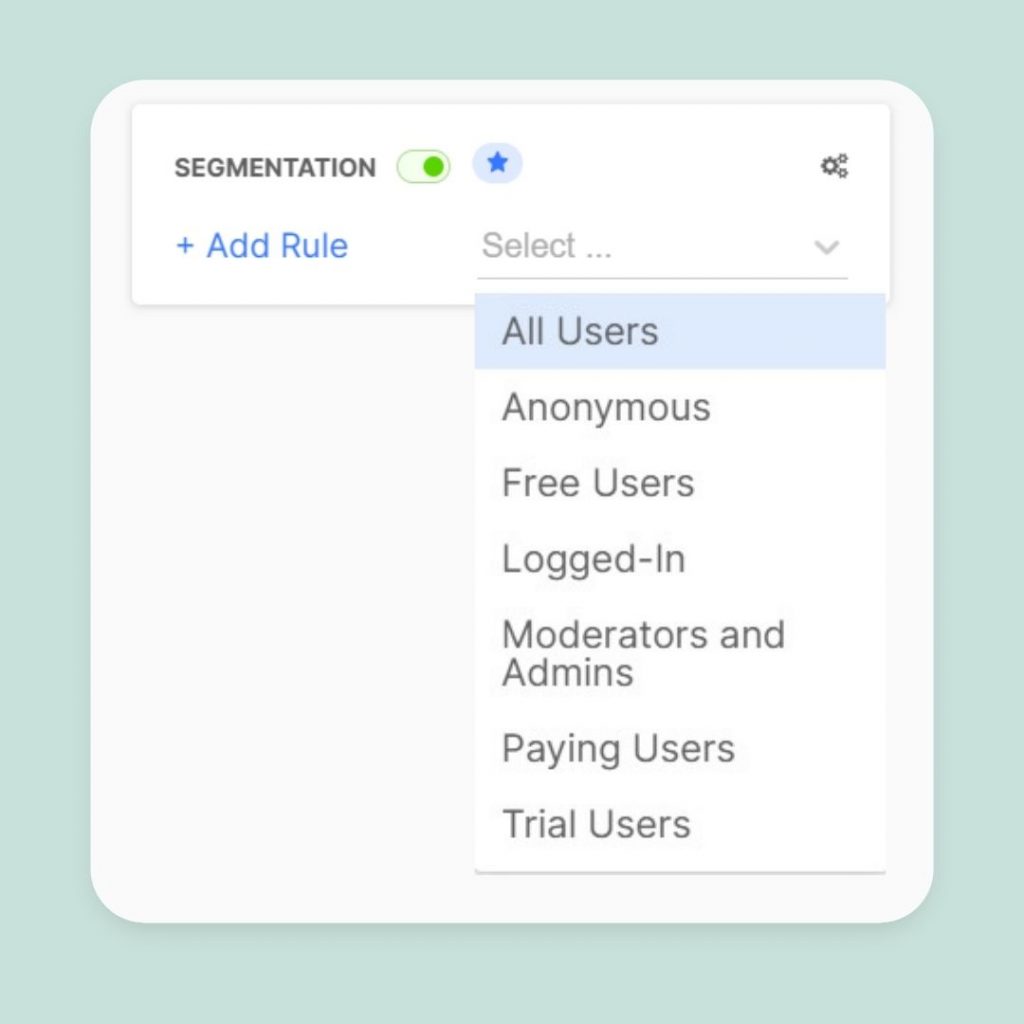
Additionally, it’s essential to maintain consistent communication with users throughout their customer journey. This could include welcoming them with personalized messages, providing regular updates on product developments or changes, and sending reminders for upcoming events or promotions.
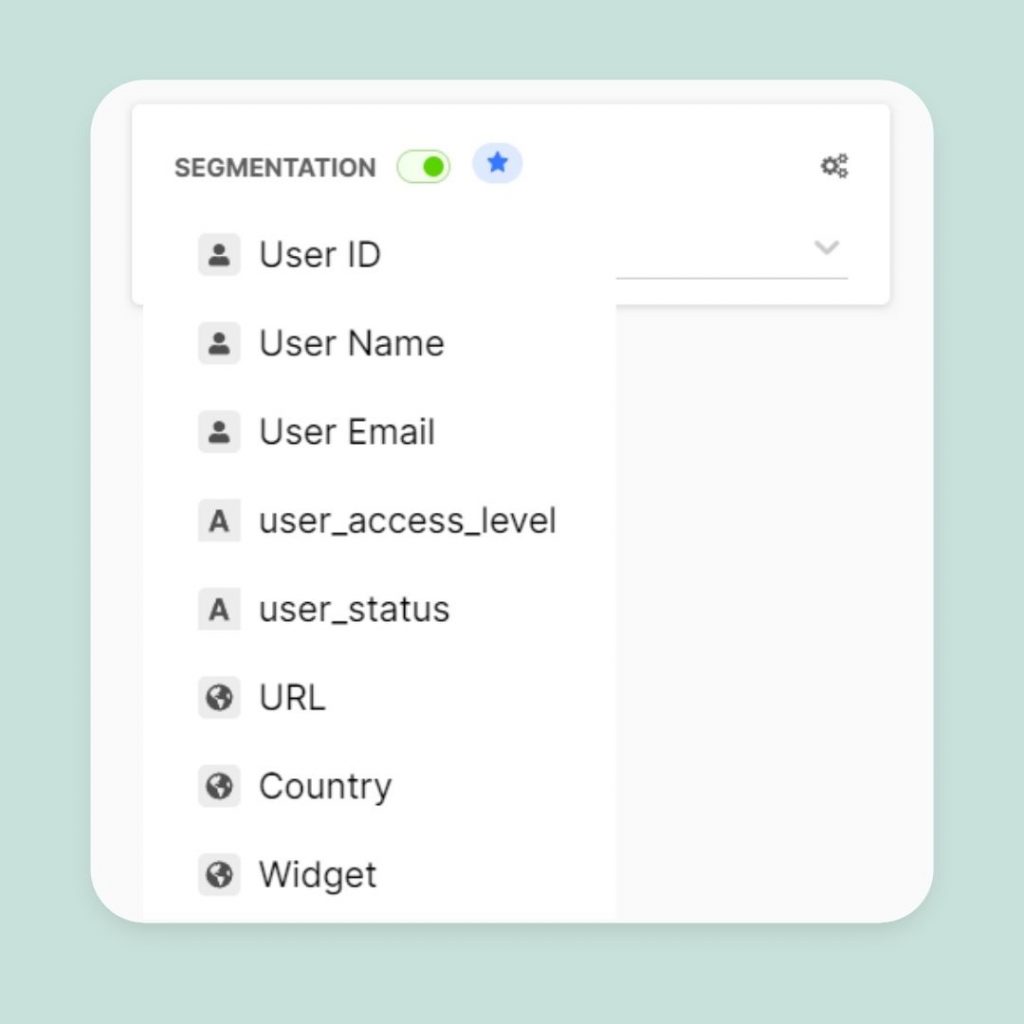
Overall, regular communication helps build trust and loyalty with users while keeping your brand top of mind. By leveraging audience segmentation tools and creating personalized content across multiple channels, you can increase retention rates significantly.

Quick Setup, Easy to Use, and Many Integrations
Manage your product announcements from a single place and easily distribute them
across multiple channels.
5. Utilize Rewards
One effective way to improve user retention is by utilizing rewards. Offering incentives for users who stick around and continue to engage with your product or service can be a powerful motivator. Rewards can come in many forms, such as discounts, exclusive content, or early access to new features.
When implementing a rewards program, it’s important to keep the needs and preferences of your target audience in mind. For example, if you have an app geared towards fitness enthusiasts, offering discounts on healthy food or workout gear could be a popular reward option. Additionally, make sure the rewards are achievable and attainable so that users feel encouraged rather than discouraged.
Finally, it’s essential to promote your rewards program effectively. Use targeted messaging and personalize offers based on user behavior and preferences. This will help ensure that users are aware of the incentives available to them and motivated to stay engaged with your product or service over time.
6. Foster Community and Connections
One of the most effective ways to increase user retention is to foster community and connections among your users. By creating a sense of belonging and shared purpose, you can build a loyal user base that will keep coming back for more. There are several strategies you can use to achieve this goal.
First, consider creating a forum or discussion board where users can connect with each other and share their thoughts and experiences. This not only helps build a sense of community but also provides valuable feedback that you can use to improve your product or service.
Second, consider hosting events or meetups for your users. This gives them an opportunity to meet each other in person and fosters stronger connections between them and with your brand. Finally, don’t forget about social media – be sure to engage with your users on platforms like Twitter, Facebook, and Instagram by sharing relevant content, responding promptly to comments and messages, and encouraging user-generated content. By fostering community and connections among your users in these ways, you’ll create a strong foundation for long-term user retention.
7. Make UX/UI Pleasant and Easy to Use
One of the most important aspects of increasing user retention is to make sure that your UX UI (user experience/user interface) is pleasant and easy to use. This means having a website or app that is intuitive, visually appealing, and functional. Users should be able to easily navigate through your site or app without encountering any roadblocks or frustrating experiences.
To achieve this, it’s important to conduct user testing and gather feedback from your audience. This will help you identify pain points in the user experience and make necessary adjustments. Additionally, investing in a skilled UX/UI designer can greatly improve the overall look and feel of your product.
By prioritizing UX UI, you not only increase the likelihood of retaining users but also attract new ones through positive word-of-mouth recommendations. Remember, a happy user is more likely to stay engaged with your product over time.
8. Analyze and Test Results to Increase User Retention
Analyzing and testing results is critical to improving user retention. By monitoring and analyzing user behaviors, businesses can understand what works and what doesn’t. It’s essential to track the metrics that matter most – such as customer lifetime value, churn rate, and engagement rates.
Testing different strategies is equally important. A/B testing can be used to compare two variations of a website or app feature, determining which performs better in terms of user retention. The data from these tests can then inform future decisions, allowing businesses to optimize their efforts for maximum impact.
In conclusion, analyzing and testing results is key to increasing user retention. By tracking relevant metrics and experimenting with new strategies, businesses can identify what works best for their audience and continually refine their approach over time.
Conclusion: Increase User Retention
In conclusion, when it comes to user retention, there are many strategies that businesses can use to ensure that their customers remain loyal and engaged. From creating a personalized user experience to providing loyalty rewards, businesses should focus on understanding what users want and how they want it. With the right approach, businesses can increase user retention and create long-term value for both their business and their customers. Additionally, by understanding the impact of user churn and focusing on reducing it, companies can maintain and grow their customer base.
How to Measure User Retention
Before you can improve user retention, you need to know how to measure it accurately. User retention measurement gives you a baseline to work from and helps you understand whether your strategies are actually moving the needle. There are three core metrics every SaaS team should track.
The User Retention Rate Formula
The standard retention rate formula is: Retention Rate = ((Users at End of Period – New Users Acquired) / Users at Start of Period) × 100. For example, if you start the month with 500 users, acquire 80 new ones, and end with 520, your retention rate is ((520 – 80) / 500) × 100 = 88%. This tells you that 88% of your existing users stayed active over that period.
It’s worth calculating retention at multiple time horizons: Day-1 retention (did the user return the day after signing up?), Day-7 retention, and Day-30 retention. Each reveals a different leakage point. Day-1 is primarily an onboarding signal, Day-7 reflects habit formation, and Day-30 reflects genuine product value delivery.
User Retention Rate vs. Churn Rate
Churn rate is the mirror image of retention rate: Churn Rate = (Users Lost During Period / Users at Start of Period) × 100. If your retention rate is 88%, your churn rate is 12%. Both metrics tell you the same story from different angles — retention focuses on who stayed, churn focuses on who left. Most SaaS teams track both because each surfaces different insights in stakeholder conversations.
A healthy SaaS business typically targets monthly churn below 5% (ideally below 2% for mature products). If your monthly churn is above 8%, that signals a fundamental product-market fit or onboarding issue that no retention campaign can fully compensate for — the root cause needs addressing first.
DAU/MAU Ratio
The DAU/MAU ratio (Daily Active Users divided by Monthly Active Users) measures engagement stickiness rather than raw retention. A ratio of 0.2 (20%) means users engage roughly once per week on average; a ratio of 0.5+ is considered excellent and is typical of habit-forming products like Slack or Notion. Tracking DAU/MAU alongside your retention rate gives you a richer picture: you can have high 30-day retention but low DAU/MAU, which often means users are staying subscribed but not actively deriving value — a churn risk signal worth watching.
What Is a Good User Retention Rate for SaaS?
Benchmarks vary by product category and price point, but here are widely referenced SaaS retention benchmarks to calibrate against:
- Day-1 retention: 25–40% is average; 50%+ is strong
- Day-7 retention: 15–25% is average; 30%+ is strong
- Day-30 retention: 10–20% is average; 25%+ is strong
- Annual SaaS retention (revenue): 85–90% is the benchmark for healthy growth-stage SaaS
Research from Bain & Company found that increasing customer retention by just 5% can increase profits by 25% to 95% — one of the most cited statistics in SaaS growth, and a compelling reminder that retention improvements compound over time in ways that acquisition rarely does.
9. Optimize User Onboarding
If there is a single retention lever with more impact than any other, it is onboarding. The first few minutes and hours of a user’s experience with your product are disproportionately predictive of whether they will still be active 30 days later. Every top competitor in this space — from ProductSchool to Amplitude to CleverTap — cites onboarding as the #1 retention driver, and the data bears this out: users who reach their “aha moment” within the first session retain at dramatically higher rates than those who don’t.
Effective onboarding is not a single welcome email or a product tour overlay. It is a deliberately engineered sequence that guides new users to the specific action that delivers value as quickly as possible. Start by identifying your product’s activation event — the action that most strongly correlates with long-term retention in your cohort data. For a project management tool, this might be “creates first task and assigns it to a teammate.” For a changelog tool like AnnounceKit, it might be “publishes first announcement and sees it appear to users.” Once you know that moment, engineer every onboarding touchpoint to drive toward it.
Three onboarding improvements consistently move retention metrics: First, progressive disclosure — don’t expose every feature on day one. Show users the minimal path to value, then introduce advanced features as they become relevant. Second, in-app checklists and progress tracking — users who see a setup checklist complete it at significantly higher rates than those who receive unstructured walkthroughs. Third, contextual tooltips and empty state guidance — the moments when a user encounters an empty screen are high churn-risk moments; filling those empty states with clear, helpful direction (“You haven’t published an update yet — here’s how”) dramatically reduces early dropout. For more on this, see our guide to SaaS onboarding best practices.
10. Re-engage Inactive Users
Even with excellent onboarding and a strong core product loop, some percentage of your users will go inactive. This is normal — but letting them drift without intervention is leaving recoverable revenue on the table. Re-engagement campaigns target users who have stopped their typical usage pattern before they formally churn, which is almost always easier and cheaper than winning back a user who has cancelled and moved to a competitor.
The most effective re-engagement campaigns are triggered behaviorally, not on a fixed calendar schedule. Set up automated workflows that fire when a user hasn’t logged in for 7 days, hasn’t used a core feature in 14 days, or hasn’t completed their account setup after 5 days. The message should acknowledge the inactivity without being accusatory, highlight a specific value the user hasn’t yet experienced, and provide a single clear call to action. “You haven’t seen how [Feature X] works — here’s a 2-minute walkthrough” outperforms generic “We miss you!” campaigns by a significant margin because it provides a concrete reason to return.
Re-engagement should use multiple channels in sequence, not simultaneously. Start with in-app messaging if the user does log back in. If they don’t, trigger an email after 7 days of inactivity. For products with push notifications, a well-timed push at day 10 can recover users who have missed or ignored email. The goal is to catch users at different touchpoints without overwhelming them — a coordinated sequence feels helpful; simultaneous blasts feel desperate. In-app notifications are particularly effective here because they reach users at the moment of return, when intent is highest.
Frequently Asked Questions About User Retention
What is a good user retention rate for SaaS?
For SaaS products, a monthly retention rate above 95% (meaning monthly churn below 5%) is generally considered healthy, with best-in-class products targeting 97–98% monthly retention. Day-30 retention benchmarks vary by category: consumer apps typically see 15–25%, while B2B SaaS products often achieve 30–50% because users have a workflow dependency on the tool. The most important benchmark is your own cohort trend over time — improving retention by even 2–3 percentage points monthly compounds into significant revenue impact over a year.
What is the difference between user retention and churn rate?
User retention rate measures the percentage of existing users who continued using your product over a given period. Churn rate measures the percentage who stopped. They are mathematical inverses: if your retention rate is 90%, your churn rate is 10%. Most teams track both because retention is the positive framing (useful for goals and motivation) while churn is the negative framing (useful for risk monitoring and financial modeling). Net Revenue Retention (NRR) is a related metric that also accounts for expansion revenue from existing users.
How do you calculate user retention rate?
The formula is: Retention Rate = ((Users at End of Period − New Users Acquired) / Users at Start of Period) × 100. For example, if you start a month with 1,000 users, acquire 150 new users, and end with 980 users, your retention rate is ((980 − 150) / 1,000) × 100 = 83%. The key is to subtract new users acquired during the period so you are only measuring how well you retained existing users, not inflating the rate with new signups.
What is the biggest cause of poor user retention?
Poor onboarding is consistently the leading cause of early churn — users who do not reach their “aha moment” within the first session rarely return. Beyond onboarding, the most common causes are: lack of perceived ongoing value (users don’t see the product improving or solving new problems), poor communication about new features and updates (users don’t know the product has gotten better), and friction in core workflows (too many clicks, confusing UI, or missing integrations). Addressing retention requires diagnosing which of these is the primary driver for your specific product through cohort analysis and exit surveys.
How does onboarding affect user retention?
Onboarding has an outsized impact on long-term retention because it determines whether users ever reach the point of genuine product value. Research consistently shows that users who complete a meaningful onboarding flow — reaching an activation event that delivers clear value — retain at rates 2–3x higher than users who drop off before that point. The first 7 days are the highest-risk period for churn in most SaaS products, and nearly all of that risk can be reduced through better onboarding design: clearer empty states, in-app checklists, contextual guidance, and targeted messaging to users who haven’t yet activated.
Can in-app notifications improve user retention?
Yes — in-app notifications are one of the highest-leverage retention tools available because they reach users at the moment they are already engaged with your product. Unlike email, which competes for attention in an inbox, in-app notifications appear in context and can be personalized to the user’s specific behavior and lifecycle stage. Announcing new features, releasing changelog updates, prompting users to try capabilities they haven’t discovered, and surfacing tips based on usage patterns are all proven use cases. Tools like AnnounceKit make it straightforward to publish product updates and in-app announcements that keep users informed and engaged without requiring engineering resources for every notification.

![In-App Banners vs. Modals vs. Tooltips: A Decision Guide for SaaS Teams [+ Comparison Table]](https://announcekit.app/blog/wp-content/uploads/2025/07/In-App-Banners-vs.-Modals-vs.-Tooltips-768x422.jpg)