A product announcement is your chance to turn a shipped feature into a business outcome — adoption, activation, or renewed engagement. Most teams underinvest in announcements and leave measurable value on the table. This guide gives you a step-by-step writing framework, 5 copy-paste templates (including a press release template), and 8 proven tips for announcements that actually get attention.
What Is a Product Announcement?
A product announcement is a communication to users, customers, or the press that introduces a new product, feature, pricing change, or update. Unlike internal release notes, a product announcement is designed to generate action — it should excite, inform, and drive users to try something new. Product announcements can take the form of emails, in-app notifications, press releases, social posts, or blog posts, depending on the audience and the scale of the change.
Types of Product Announcements
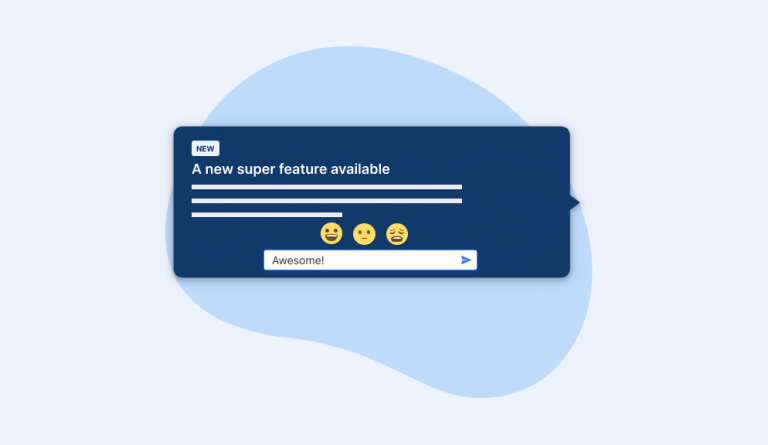
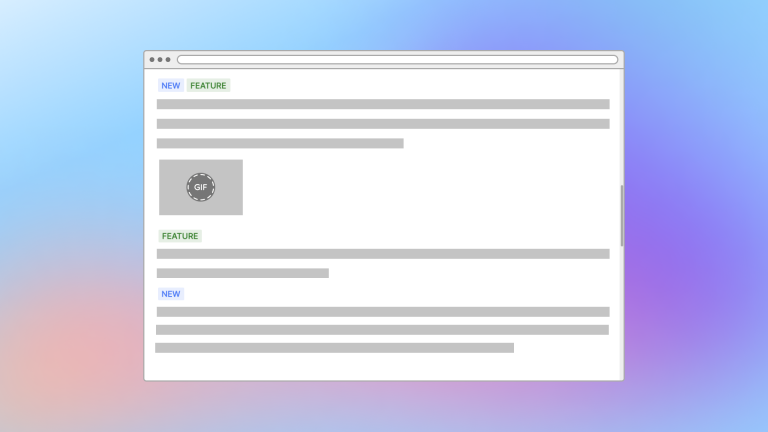
Different announcements serve different goals and require different formats. The main types are: new product launch (the highest-stakes type, often requires a multi-channel campaign), new feature announcement (the most common type for established SaaS products), pricing change announcement (the most sensitive type — requires early notice and transparent reasoning), beta / early access invite (creates exclusivity and drives power-user activation), and deprecation notice (requires clear migration paths and maximum lead time). AnnounceKit’s in-app changelog widget is particularly effective for new feature and beta announcements — users see the notification badge mid-session when they’re most likely to take action.
How to Write a Product Announcement: Step-by-Step Guide
Step 1: Understand your audience
Before you write a word, identify who this announcement is for. Existing customers? Potential buyers? The press? Your internal team? Each audience needs different information and a different tone. A feature announcement to existing power users can use product terminology; a press release must be readable by a journalist who has never used your product. Segment your announcement by audience if the change affects different groups differently — for example, enterprise admins and end users often need separate communications for the same release.
Step 2: Define your goal
What specific action do you want readers to take? “Try the new dashboard” is a measurable goal. “Be aware of our update” is not. Every announcement should have one primary CTA — not three. Your goal determines the channel (in-app notification for feature adoption, email for re-engagement, press release for media coverage) and the success metric you’ll track.
Step 3: Lead with the benefit, not the feature name
The most common mistake in product announcements is opening with the feature name: “Introducing Advanced Analytics v2.0.” Your users don’t care about the feature name — they care about what it does for them. Reframe every announcement around the user outcome: “See exactly where users drop off — then fix it.” That’s the kind of opening line that gets clicks. Tools like AnnounceKit help by letting you preview how your announcement will appear to users before publishing, so you can A/B test your headline against your audience.
Step 4: Write a compelling subject line or headline
For email: use benefit-led subject lines that are 40–60 characters. “You can now [do X] in [Product]” outperforms “Product Update: [Feature Name]” consistently in A/B tests. For in-app: keep the announcement title to 8–12 words — users see it as a notification badge popup. For press releases: the headline should answer “who did what, and why does it matter?” in one sentence.
Step 5: Explain what’s new in plain language
Assume your reader has been on holiday for a week and has no context. Describe the new capability in 2–3 sentences that someone outside your product team can understand. Avoid internal code names, jargon, and acronyms that mean nothing to users. If the feature is complex, link to a help article rather than trying to explain everything in the announcement itself.
Step 6: Add a single primary CTA
One announcement, one action. “Try it now” or “See how it works” beats a paragraph that ends with “…you can also read our blog post, watch our webinar, or upgrade your plan.” Every additional CTA splits attention and reduces the conversion rate on your primary goal. If you have multiple things to say, send multiple announcements.
Step 7: Choose your channels
Match the announcement to the channel that best reaches your target user at the right moment. In-app notifications (via AnnounceKit) catch users mid-session and drive immediate feature adoption. Email reaches inactive users and is essential for pricing or plan changes. Social posts broaden awareness beyond your existing user base. Press releases generate media coverage for major launches. For most SaaS feature releases, in-app + email is the winning combination — together they consistently outperform either channel alone.
Step 8: Measure and iterate
Track the metrics that matter for your goal: in-app click-through rate, email open and click rates, feature adoption rate in the week following the announcement, support tickets generated by the change. AnnounceKit’s analytics dashboard shows engagement per announcement entry — use it to learn which announcement formats drive the most action and double down on those patterns.
5 Product Announcement Templates
Template 1: New Feature Announcement Email
Subject: You can now [benefit] in [Product Name]
Body: Hey [First Name], [Feature Name] is live — and it solves [user pain point]. Here’s what you can do with it: [2–3 bullet benefits]. [CTA Button: Try [Feature Name] Now] Questions? Reply here — we read everything. [Your Name], [Product Team]
Template 2: Pre-Launch / Teaser Email
Subject: Something big is coming to [Product Name] — [Date]
Body: Hey [First Name], We’ve been building something for [time period] that [teaser description — hint at the benefit without revealing the full feature]. We’re launching on [Date]. Here’s what to expect: [2–3 bullet teaser points]. [CTA Button: Get Early Access / Add to Calendar] We’ll share more on [Date]. [Your Name], [Product Team]
Template 3: Pre-Order Announcement Email
Subject: [Product Name] pre-orders are open — [early bird offer if applicable]
Body: Hey [First Name], We’re opening pre-orders for [Product Name / Feature] today. [1–2 sentence description of what it is and who it’s for.] Pre-order now and get: [Benefit 1 — e.g. locked-in pricing], [Benefit 2 — e.g. priority access], [Benefit 3 — e.g. founding member status]. Pre-orders close [Date] or when we reach [number] customers. [CTA Button: Pre-Order Now — [Price]] [Your Name], [Team]
Template 4: Beta / Early Access Invitation
Subject: You’re invited: early access to [Feature Name]
Body: Hey [First Name], We’re rolling [Feature Name] out to a select group first — and you’re on the list. [1-sentence description of the feature and its primary benefit.] To activate it: [1–2 steps]. Your feedback directly shapes the final release. Reply with anything you notice — good or bad. [CTA Button: Enable [Feature Name]] [Product Team]
Template 5: Product Announcement Press Release
FOR IMMEDIATE RELEASE
[Company Name] Launches [Product/Feature Name] to [Primary Benefit]
[City, Date] — [Company Name], a [brief descriptor, e.g. “leading SaaS platform for product announcements”], today announced [Product/Feature Name], a new [type of product/feature] that enables [target user] to [primary benefit] without [key pain point it removes].
[Second paragraph: Why this matters. 2–3 sentences on the market problem this solves and why the company is well-positioned to solve it.]
“[Quote from company CEO or VP Product — should reinforce the customer benefit, not describe internal process.]” said [Name], [Title] at [Company Name].
[Third paragraph: Key facts about the product. Pricing, availability, platform support, notable customers or early partners if applicable.]
“[Optional customer quote — ideally from a named recognizable customer.]” said [Name], [Title] at [Customer Company].
[Company boilerplate: 3–5 sentence standard description of what your company does, founded, HQ, funding if relevant.]
Media Contact:
[Name]
[Email]
[Phone]
Multi-Channel Announcement Strategy
| Announcement Type | In-App (AnnounceKit) | Press Release | Social | |
|---|---|---|---|---|
| New feature | ✅ Primary | ✅ Secondary | ❌ | ✅ Optional |
| Major product launch | ✅ | ✅ | ✅ | ✅ |
| Pricing change | ✅ | ✅ Required | ❌ | ❌ |
| Beta invite | ✅ Targeted | ✅ Targeted | ❌ | ❌ |
| Deprecation | ✅ | ✅ Required | ❌ | ❌ |
In-app notifications via AnnounceKit catch users mid-session — the highest-intent moment for feature adoption. Email reaches users who haven’t logged in recently. Using both channels on the same announcement typically drives 2–3× higher feature adoption compared to email alone, because you’re covering both active and dormant user segments in one release cycle.
8 Expert Tips for Product Announcements That Get Attention
1. Lead with the user outcome, not the feature name. “You can now export to PDF in one click” beats “Introducing PDF Export v1.0” every time.
2. Keep it short. For in-app: under 100 words. For email: under 200 words plus one image. For press releases: under 600 words with boilerplate.
3. Use one primary CTA. Every additional CTA reduces the conversion rate on your primary goal. Pick one action and make it unmissable.
4. Announce early for pricing changes. Give 30+ days notice for any pricing changes on paid plans. Surprise pricing changes are the single fastest way to generate churn and trust damage.
5. Segment for relevance. With AnnounceKit’s audience segmentation, you can show different announcements to different user cohorts — admins vs. end users, free vs. paid, onboarded vs. not-yet-activated. Relevant announcements get 3–5× higher engagement than untargeted ones.
6. Pair announcements with a help article. Every announcement should link to “Learn more” documentation. Users who want to go deeper shouldn’t have to search — you should send them directly. This also reduces support load from confused users.
7. Be consistent with cadence. Pick a rhythm — weekly, biweekly, or per-release — and stick to it. Users who know to expect “Friday What’s New” emails start looking for them. Predictability reduces unsubscribe rates.
8. Measure feature adoption, not just opens. Email open rates tell you about your subject line. Feature adoption rate tells you whether the announcement worked. Track the percentage of users who tried the feature in the 7 days following your announcement — that’s the metric that actually matters.
Frequently Asked Questions
What is the difference between a product announcement and a press release?
A product announcement is any communication to users or customers about a change. A press release is a specific format designed for media distribution — it follows a formal structure (headline, dateline, lead paragraph, quotes, boilerplate) and is sent to journalists and wire services. Not every product announcement requires a press release; typically only major product launches, funding rounds, or significant company milestones warrant the press release format.
How long should a product announcement be?
For in-app: 50–100 words. For email: 150–250 words plus one image. For a press release: 400–600 words including boilerplate. For a blog post covering a major launch: 800–1,200 words. If you need more than 300 words to describe a feature in an email, write a blog post and link to it from a 100-word email.
When should I use in-app announcements vs. email?
In-app announcements (via AnnounceKit) are best for active users mid-session — they see the announcement when they’re already in a product mindset and most likely to try something new. Email is best for reaching users who haven’t logged in recently or for high-stakes communications (pricing changes, deprecations) where you need a paper trail. For maximum feature adoption, use both.
How do I measure whether a product announcement was successful?
For feature announcements: measure feature activation rate in the 7 days following the announcement (% of users who tried the feature). For email: open rate (benchmark: 25–40% for product updates) and click rate (benchmark: 3–8%). For in-app: click-through rate on the announcement widget (benchmark: 15–25% for active sessions). AnnounceKit provides per-announcement analytics to track these metrics without additional instrumentation.
What are the best channels for a SaaS product announcement?
The highest-ROI combination for most SaaS products is in-app widget (AnnounceKit) + email digest. In-app catches active users mid-session with near-zero friction; email reaches dormant users and ensures compliance communications are delivered. For major product launches, add a blog post (for SEO and social sharing) and social media posts. Reserve press releases for funding, acquisitions, or genuinely newsworthy launches.